A look at digestive health and gastrointestinal medicines The digestive system breaks down food, absorbs nutrients, and eliminates waste. Its health is important for overall health. Gastrointestinal medicines help treat...
Read more
Select options
This product has multiple variants. The options may be chosen on the product page
A look at digestive health and gastrointestinal medicines
The digestive system breaks down food, absorbs nutrients, and eliminates waste. Its health is important for overall health. Gastrointestinal medicines help treat many different stomach and intestinal problems that can be painful and interfere with daily life.
This group includes medicines that adults and kids who have digestive problems like acidity, indigestion, bloating, constipation, or diarrhea often take. These medicines support normal digestive processes, ease pain, and help restore balance in the GI tract. Because digestive symptoms can sometimes be signs of deeper health problems, it is strongly suggested that you talk to a doctor before taking any gastrointestinal medicines.
Why do people take medicines for their gut?
Gastrointestinal medicines are a group of treatments that help the stomach, intestines, and digestive system work better and stay healthy. The main reason for taking them is to ease digestive problems and maintain healthy digestion.
To put it simply, these medicines may work by:
Getting rid of too much stomach acid
Keeping the stomach lining safe
Making bowel movements more regular
Helping the body digest and absorb nutrients
Intestinal medications are often used to treat digestive problems temporarily or for a longer period, as directed by a doctor. Based on your symptoms and medical history, your doctor can figure out the best course of action.
Problems We Often Fix
Medicines for the intestines can help with the following health problems:
When stomach acid flows back up into the esophagus, it causes heartburn and acid reflux.
Indigestion is feeling sick, full, or uncomfortable after eating.
Constipation: bowel movements that are hard or don't happen often
Diarrhea means having loose or frequent stools, which can make you lose water.
Gas and Bloating: Too much gas puts pressure on the abdomen
Gastritis is inflammation of the stomach lining.
Digestive sensitivity means having stomach pain that won't go away for no clear reason.
A correct diagnosis helps ensure the best treatment method is used.
In this group are different types of medicines.
Gastrointestinal medicines come in a variety of forms to accommodate people of all ages, tastes, and digestive needs:
Tablets: Usually used to lower acid, help digestion, and keep bowels regular.
Most capsules are designed to release slowly or in a specific way in the digestive tract.
Sipping syrups is good for kids or people who like liquid forms.
Creams or gels: Put on the outside of the body to treat certain digestive problems when prescribed
Inhalers aren't used very often and are only prescribed in certain medical situations.
Drops: These are often used for babies or when exact dosing is needed.
Which form to use depends on the condition, the person's age, and medical advice.
Tips for Picking the Best Medicine
Expert advice should always be sought when picking the right medicine for digestive problems. Considerations that are important include:
Note the type, length, and severity of your digestive problems as symptoms.
Comparison of Prescription and Over-the-Counter Medicines: Some medicines can only be used safely with a prescription.
Age: Different needs apply to kids, adults, and older people.
Medication Form: Tablets, syrups, or drops, whichever is easiest and most comfortable for you.
Doctor consultation: necessary to find the root causes and ensure safe treatment
Instead of asking a doctor, don't take multiple digestive medicines at the same time.
Warnings and information about safety
When used correctly, gastrointestinal medicines are usually safe, but there are some things that should be kept in mind:
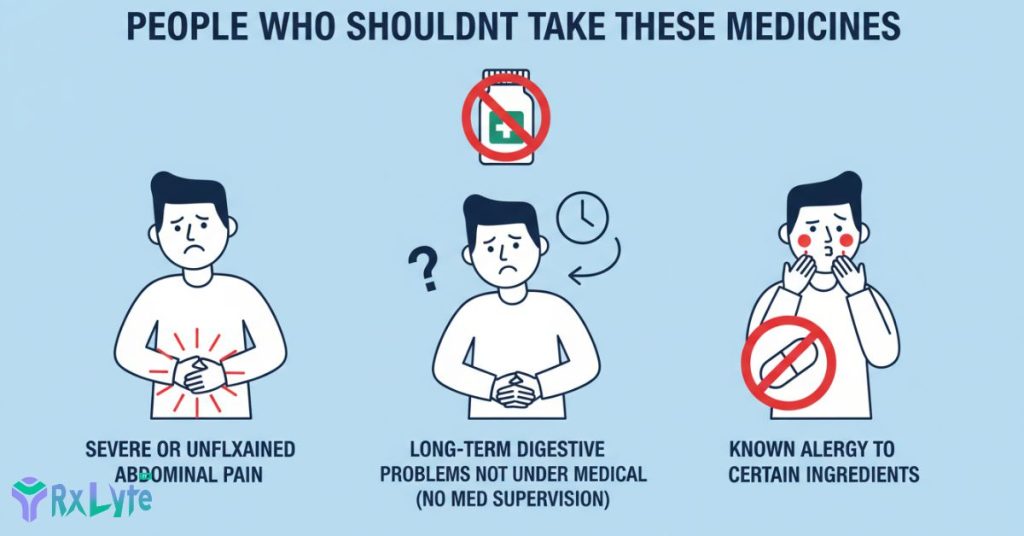
People who shouldn't take these medicines
People who have severe or unexplained abdominal pain
People with long-term digestive problems who are not under medical supervision
People who are known to be allergic to certain ingredients
General Side Effects That Might Happen
Mild sickness
Pain in the abdomen
Changing your bowel habits for a short time
Drug Interactions: Be Careful
Some drugs may not work well with antibiotics or heart drugs.
Always let your doctor know about any other medicines you are taking.
Warning about pregnancy and breastfeeding
Use only if your doctor says it's okay while you're pregnant or breastfeeding.
Reasons to See a Doctor
Symptoms stay the same or get worse.
There is blood in the stools.
There is severe or ongoing abdominal pain.
With medical advice, use is more likely to be safe and effective.
Why buying gastrointestinal medicines online is a good idea.
There are several good reasons to buy stomach medicines from a reputable online store:
Comfort: It's easy to order from home, so you don't have to go to the pharmacy as often.
Variety: You can find a lot of digestive health products in one place.
Privacy: Shopping privately for sensitive digestive issues
Easy to Compare: Look over the product choices and forms before making a decision.
Make sure that the online pharmacy always follows the rules set by regulators and prescriptions.
Tips for Storing
To keep medicines safe and of good quality:
Keep away from heat and moisture.
Keep away from water, heat, and sunlight.
Hold on to medicines in their original boxes.
Keep out of children's reach.
Read the label and follow the storage instructions.
Frequently Asked Questions
You can get some products without a prescription, but if your symptoms last a long time or are very bad, you should see a doctor.
The time it takes to work depends on the condition and the medicine. A health care worker can give you advice.
Mild side effects may happen to some people, especially if they use it for a long time.
Daily use depends on the type of medicine and what your doctor tells you. Use for a long time should be supervised.
They help with the symptoms, but they might not treat the underlying problems, which need to be looked at by a doctor.




 Sale!
Sale! Select options
This product has multiple variants. The options may be chosen on the product page
Select options
This product has multiple variants. The options may be chosen on the product page