Hair Care Products: A Look at Medicines and Treatments Having healthy hair is often a sign of overall health, but at different points in their lives, many people experience hair...
Read more
Select options
This product has multiple variants. The options may be chosen on the product page
Hair Care Products: A Look at Medicines and Treatments
Having healthy hair is often a sign of overall health, but at different points in their lives, many people experience hair loss, thinning, dandruff, or scalp issues. Hair care products sold in pharmacies are intended to improve scalp health, strengthen hair, and address common hair problems.
This group includes many hair care medicines and treatments that adults and sometimes teens use when they have problems with their hair or scalp. These products may help the hair growth cycle, improve scalp health, and help hide hair problems by working on the inside or the outside. Because hair problems can be caused by insufficient nutrients, hormonal changes, or medical conditions, it is best to talk to a doctor before starting treatment.
What medicines are used in hair care products?
Hair care products are mixtures designed to support the health of your hair and scalp using medical and dermatological methods. Unlike cosmetic hair products, these medicines are usually formulated to treat specific scalp or hair problems, not just to make it look better.
To put it simply, hair care products may work by:
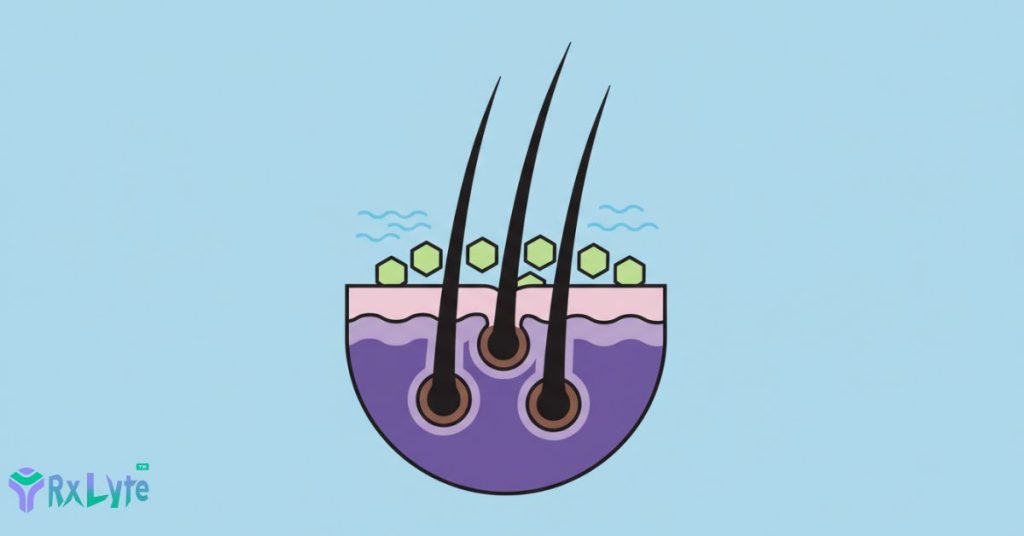
Helping hair follicles stay healthy.
Improving the health and cleanliness of the scalp
Taking a look at the nutritional aspects of hair health
Keeping the hair growth cycle in check
People often use these products to address hair loss, thinning, scalp problems, or changes in hair caused by stress, aging, or medical conditions. Based on the underlying cause, a medical professional can help you choose the best option.
Common Problems We Treat
You can get hair care products at pharmacies that can help you deal with the following conditions:
Hair loss of a lot of hair because of stress, poor nutrition, or medical conditions
Hair thinning means hair density is slowly decreasing over time.
Flaking and itching from dandruff are signs of scalp imbalance.
Dry or Irritated scalp pain caused by dryness or sensitivity
Oily scalp conditions are hair that is dirty because it makes too much sebum.
Hair that is thin or weak is more likely to break.
Figuring out what caused the problem is important to ensure the right care is given.
Different Kinds of Medicines in This Group
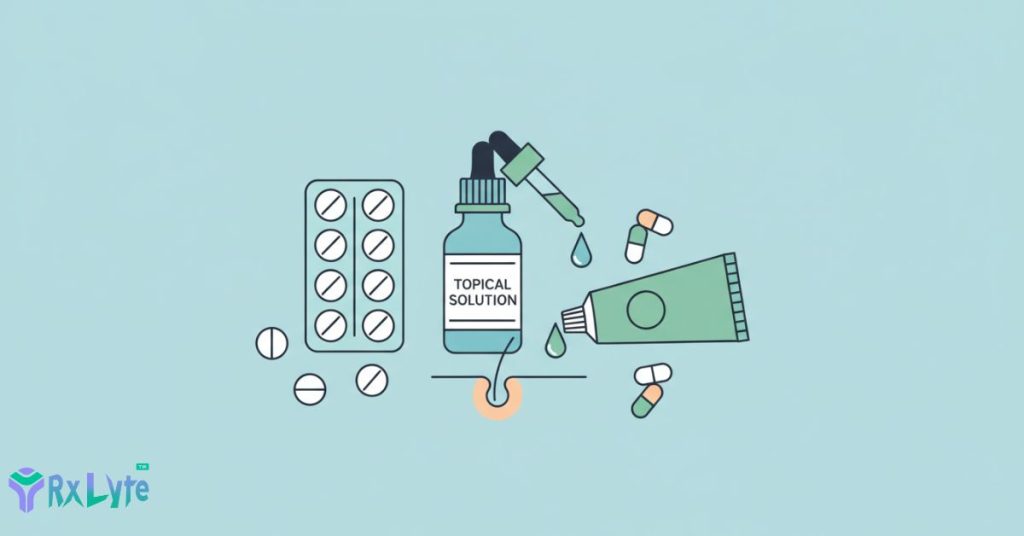
There are different kinds of hair care medicines for different needs and ways of treating hair problems.
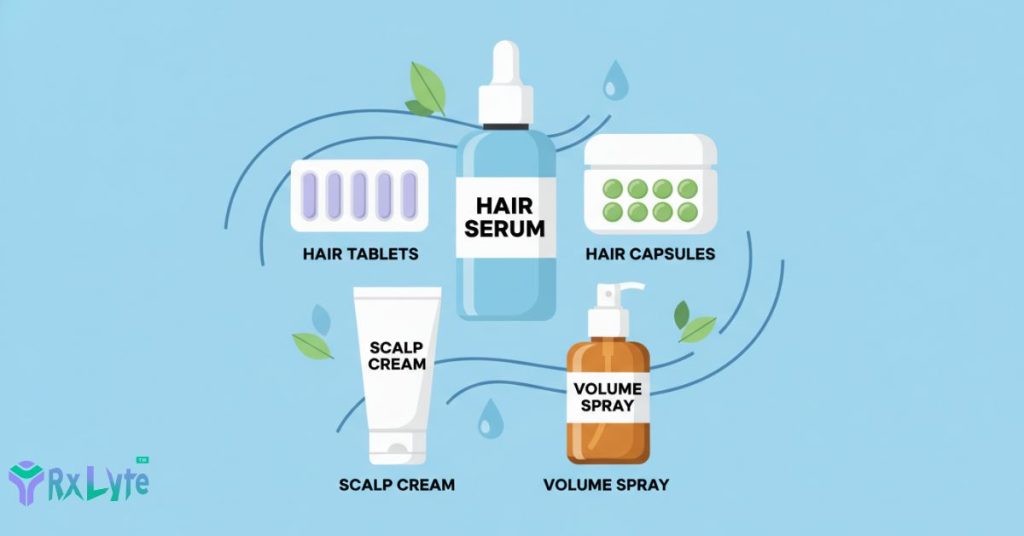
Tablets: Often used to give hair health support through medicine or nutrition
Capsules: Usually made to nourish hair and scalp specifically
Syrups are good for people who like liquid supplements.
Creams or lotions: Put on the scalp to treat problems in that area
Inhalers are rarely used and are only prescribed in certain medical situations.
Drops or serums: put on the scalp directly to treat it more effectively
The chosen form is based on the person's condition, age, personal preferences, and medical advice.
Tips for Picking the Best Medicine
It's important to think carefully and get professional help when picking the right hair care product-medicine. Important factors include:
Thoughts on Hair Loss, Itching, Thinning, or Breakage
Opioids vs. Prescription Drugs: For safe use, some medicines need to be prescribed.
Concerns about age: Hair needs differ for teens, adults, and older people.
Oral supplements vs. topical applications for dosage
Dr. visit: necessary to find underlying medical or nutritional causes
Combining different hair treatments without talking to a professional first could make them less effective or cause irritation.
Warnings and information about safety
Most hair care products are safe to use as directed, but you should always take these precautions:
People who shouldn't take these medicines
People who are known to be allergic to ingredients
People who have hair loss that can't be explained and haven't seen a doctor
People with scalp infections, unless their doctor tells them not to
General Side Effects That Might Happen
Topical products cause mild scalp irritation.
Some oral supplements can cause stomach pain.
Temporary changes in the texture of hair while it is being adjusted
Drug Interactions: Be Careful
Oral hair supplements might not work well with some medicines.
Always tell your doctor about treatments you are already getting.
Warning about pregnancy and breastfeeding
Use hair care products only when your doctor tells you to.
When you should see a doctor
Heavy or sudden hair loss
Pain, redness, or an infection on the scalp
After regular use, there was no improvement.
Professional guidance makes sure that care is safe and appropriate.
Advantages of Buying Hair Care Items Online
Buying hair care products from a reputable online pharmacy has several benefits.
Benefits: You can order from home and avoid making multiple trips to the store.
Numerous Hair treatment choices are available in one place.
Privacy: Shopping privately for personal hair problems
Easy Comparison: Look over product forms and details before making a choice.
Ensure the pharmacy always follows government regulations and prescription requirements.
Storage Guidelines
To keep the safety and quality of the product:
Keep it somewhere cool and dry.
Stay away from direct sunlight and too much heat.
Keep the lids on containers tight.
Keep out of kids' reach.
Always store something according to the directions on the label.
Frequently Asked Questions
Some products can be bought without a prescription, but if you have hair problems that won't go away, you should see a doctor.
Sometimes mild side effects happen, especially when used on the skin. Talk to a doctor if the irritation doesn't go away.
Using it every day depends on the product and what your doctor tells you. Do what professionals tell you to do.
They might help you deal with your symptoms, but they don't always treat the underlying problems that need a medical exam.